Protecting Your Dog During Winter
Winter brings shorter days and colder temperatures. Here’s how to keep your dog safe and happy during the chilly months.
Visibility is key
As the days get shorter, it's crucial that both you and your dog are easily seen when you're out and about. Using reflectors on leads, collars, or even special dog coats will help you stand out in the dark. Consider a flashing light for your dog's collar too, especially if they run loose, so you can always keep track of them.
Beware of antifreeze
Car fluids like washer fluid and radiator coolant often contain glycol (ethylene glycol). Unfortunately, it has a sweet taste that can be tempting for dogs to lick.If you spill any, be extremely careful. Even a small amount can cause severe poisoning, which can be fatal. If you suspect your dog has ingested glycol, contact your vet immediately.
A dog's wardrobe
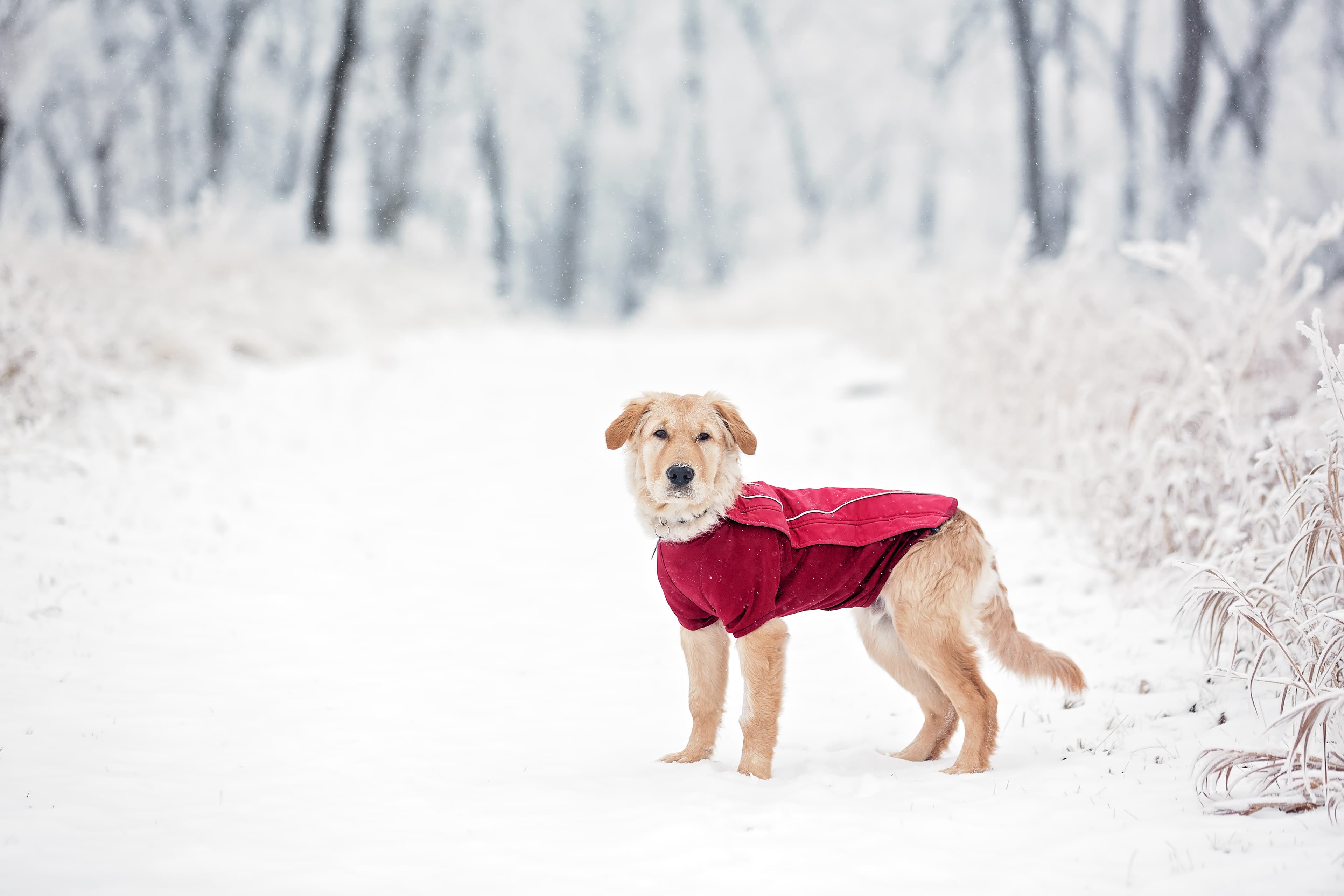
Just like us, dogs need to be dressed appropriately for the weather. For breeds with thin coats or short fur, a warm, lined coat is a good idea when temperatures drop below freezing. A waterproof coat is also beneficial for all dogs, helping to keep their fur dry during wet and cold days.
Winter car safety
Cars cool down very quickly in winter. Never leave your dog unattended in a switched-off car for any length of time, as it can become dangerously cold.
The impact of road salt
The salt used on roads in winter can dry out and irritate your dog's paws, causing discomfort. It's a good idea to rinse and thoroughly dry your dog's paws after every walk, paying special attention to the areas between their pads.
Snowy paws
When there's snow, it can clump up on your dog's paws and between their toes. You can easily remove this by rinsing their paws with lukewarm water when you get indoors. Make sure to dry them thoroughly afterwards.
Slipping hazards
On icy surfaces, even dogs can slip and injure themselves. Ensure your dog is properly warmed up before letting them run loose. If your dog has pre-existing conditions like arthritis, it's best to keep them on a lead when it's slippery.
Frostnip
Dogs can suffer from frostnip (a milder form of frostbite) in cold weather. Signs include refusing to walk and lifting paws, or in severe cases, collapsing due to cramps.
If you notice your dog showing signs of frostnip during a walk, gently massage their paws. For smaller dogs, you can carry them and tuck their paws inside your jacket for warmth. If your dog is prone to getting cold, stick to shorter walks in very cold weather and focus on indoor activities instead.
Keep their minds active
Many dogs can become under-stimulated during winter, as we tend to spend more time indoors. However, dogs often love playing in the snow, so make sure you still go for proper winter walks together, whatever the weather.
If it's too cold for extended outdoor excursions, opt for shorter walks. Crucially, you'll need to compensate with indoor stimulation. Try hiding treats or their food around the house for them to find, or teach them scent games or toy retrieval.
Winter feeding
If your dog's exercise levels decrease significantly over winter, it’s wise to monitor their food intake. You may need to slightly reduce the amount of food and treats they receive, depending on their activity levels.