Which dog harness is right?
Choosing the right harness for your dog can feel like navigating a jungle. With so many different types and uses, it's easy to get lost. This article will guide you through what to consider when selecting a everyday harness for your dog. We won't be covering specialist harnesses like those for pulling or tracking here.
Understanding your dog's anatomy
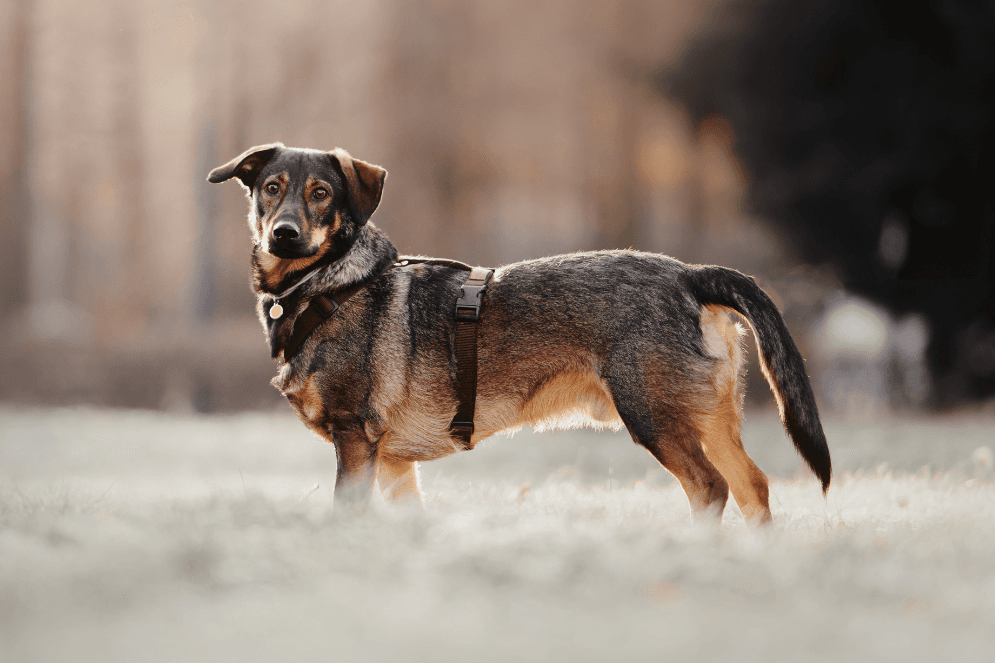
The most crucial factor when choosing a harness is the fit, which directly relates to how the harness affects your dog's skeleton. Let's look at some common signs that a harness isn't sitting right on your dog's unique body shape.
The elbow
If a harness is too tight around the elbow, it can cause chafing. It might also restrict your dog's ability to move their front leg backwards, shortening their stride.
The shoulder blade (above the front leg)
A harness that crosses over the shoulder blade can impede its movement. This can lead to stiff muscles, and in turn, cause a 'wobbly' gait in the front legs.
The fetlock joint (where the shoulder blade and foreleg meet)
Freedom of movement at the fetlock joint is vital. If the harness interferes here, your dog may become stiff, take shorter strides, and potentially develop joint issues over time.
Neck and sternum
You can easily locate your dog's sternum between their front legs, slightly lower down the chest. It's a bone that protrudes slightly. The harness should rest right on the sternum to avoid pressing on the windpipe, which is located higher up. Also, ensure the harness isn't so wide at the front that it restricts shoulder joint movement.
Ribs and soft tissue
The harness shouldn't extend further back than where your dog's ribs offer protection to their internal organs. So, make sure the harness stops before you feel the end of the ribs.
Choosing the perfect dog harness
With a better understanding of your dog's anatomy and how a harness interacts with it, finding the perfect fit becomes much easier. Every dog is built differently, so harnesses will suit some dogs better than others. Factors like padding width, adjustability, and how far the harness extends down the back all play a part, and thankfully, there's plenty of choice!
Try out a few different models and observe your dog's stride. Feel the harness to make sure it's not restricting movement or causing any rubbing or pressure on sensitive areas. You'll soon find the perfect harness for your best friend!