
Cornish Rex Breed Guide
Key facts about the Cornish Rex breed
Weight: 2.5 - 4.5 kg
Wither height: 25 - 30 cm
Energy level: Energetic
Lifespan: 9 - 13 years
Social need: Medium
Colours:All sorts of different patterns and colours, for example black, cream, blue, grey, red, champagne, brown, and white.Health problems:Generally healthy but can be prone to hypotrichosis, eye issues, and skin problems.
Personality of a Cornish Rex
The Cornish Rex is a lively, curious, and social cat breed. Their most prominent trait is a great need for stimulation. They're very athletic and love to jump, play, and climb. Having more than one cat can be beneficial as it provides a playmate for your Cornish Rex. This breed is very human-friendly and loves to cuddle with its owners. While they're best suited as indoor cats, they can often be taught to walk on a lead.
Looks and fur care of a Cornish Rex
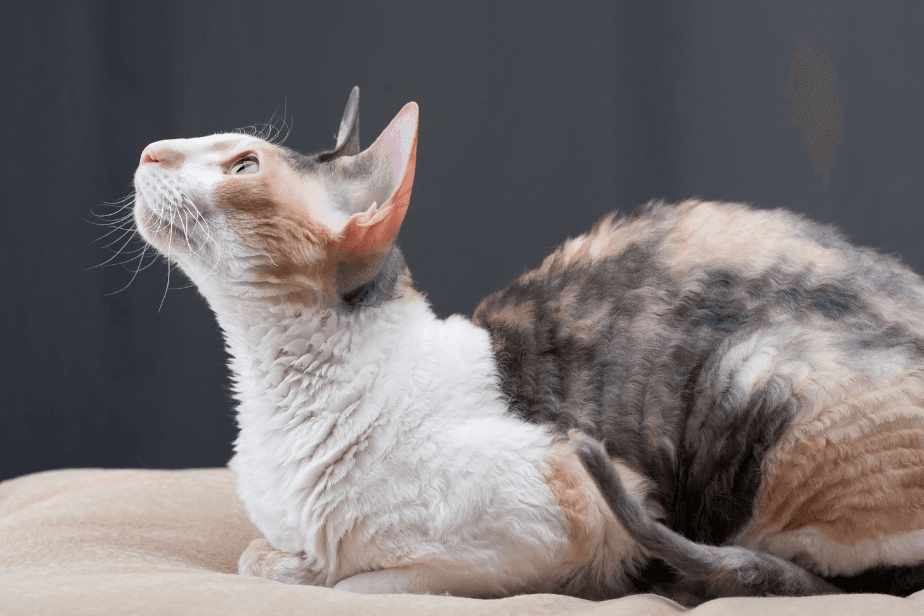
The Cornish Rex is a slim, elegant, and muscular cat with a distinctive wavy or curly coat, similar to the Devon Rex. Their coat is short, smooth, and easy to maintain, consisting almost entirely of undercoat. This means they shed very little, which can be helpful for people with allergies. However, their thin coat means they struggle to stay warm and thrive best indoors. Brush their coat once a week to keep it well-maintained and help reduce shedding.
Health problems in a Cornish Rex
The Cornish Rex cat breed is generally healthy but can be prone to certain hereditary diseases. Their unusual coat also makes them susceptible to various skin problems, such as dryness or rashes, so ensure their skin stays hydrated. It's not uncommon for Cornish Rex cats to develop tear flow issues and eye infections due to their large, prominent eyes. Regular cleaning and eye care are important to prevent these problems. Some Cornish Rex cats may also suffer from hypotrichosis, a condition that leads to hair loss.
Oral health
Did you know your cat needs their teeth brushed? Daily brushing is the best way to prevent gum disease. Learn more about ithere. The dental disease periodontal disease is common in cats, often occurring alongside periodontal disease. Brushing your cat's teeth can be a challenge, but with treats and patience, they'll eventually get used to it. Find out how to brush your cat's teethhere. Learn more about cat dental care here.
Poisoning
Many everyday items can be poisonous to cats, some of which you might not expect. Plants, for instance, can be harmful – find out which plants are poisonous to your cat here. Further examples of what is poisonous to cats are chocolate and mouse and rat poison. It's important to store things that are dangerous to cats in a place they can't get to.