Winter paw care for your dog
Our dogs' paws are sensitive to the cold, and how they react varies from dog to dog. Some get sore paws quickly, while others develop dry pads. Here’s what you can do to care for your dog's paws this winter.
Sore paws and frostbite
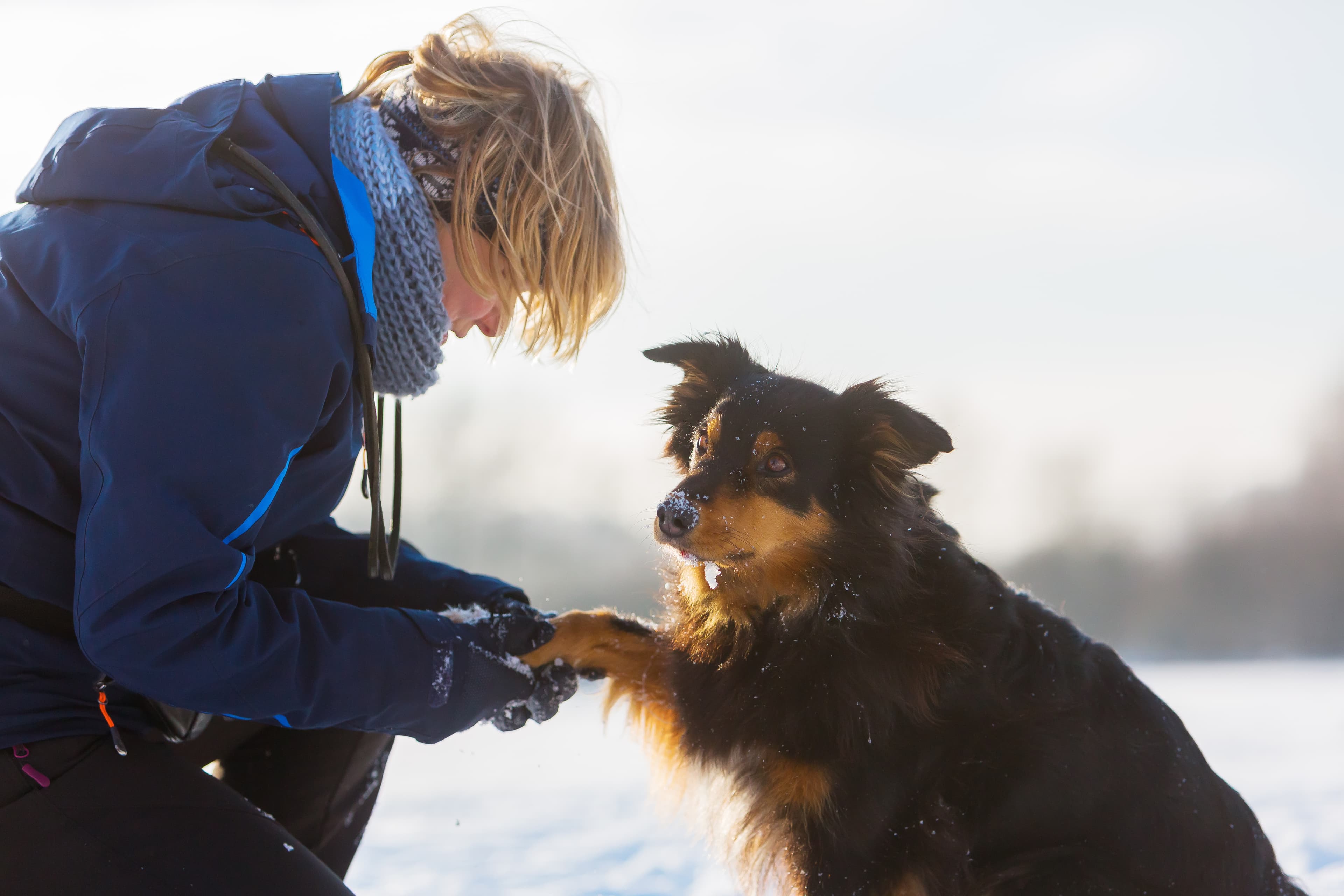
Your dog might get sore paws during walks, causing them to lift their paws or limp. They might even lie down if multiple paws are affected. If this happens, try warming your dog's paws with your hands. For smaller dogs, carrying them for a while can help. If your dog often gets sore paws, it’s best to stick to shorter walks in freezing temperatures. Be aware that your dog can suffer from frostbite if you don't pay attention to their signals. Paws, along with other extremities, are particularly vulnerable. Contact a vet immediately if you suspect frostbite.
You can also prevent frostbite by using dog shoes or socks, available at pet shops. These stop your dog's paws from coming into direct contact with snow and ice, allowing for longer walks.
Road salt and dry paws
Road salt can make your dog's paws very dry and even cracked. Try to avoid salted roads as much as possible during winter. If you live somewhere that's always salted, wash and dry your dog's paws thoroughly after walks. Applying an oily paw balm can offer further protection.
Preventive paw care
Regularly trim the fur between your dog's paw pads to help them cope better with the cold. This allows the paws to dry more quickly and prevents ice balls from getting stuck between the pads. Your dog's paw pads tend to get drier in winter, so applying a thick paw balm can prevent cracking. You can find specially formulated paw balms at pet shops. After moisturising, keep an eye on your dog to make sure they don't lick off all the balm. If they tend to lick, use a cone until the balm has soaked in.
Consider using dog shoes if your dog frequently suffers from dry, cracked paws. There are varieties designed to keep moisture out and others that offer warmth. The best option will depend on where you walk your dog. Ask for advice at your local pet shop to find the most suitable ones.