An injured paw can cause lameness
A dog's paws are vital for walking, running, and playing. Because of this, paw problems can be very distressing for your dog. An injury to the paw can lead to lameness.
If your dog is limping, always take it seriously, as lameness is a sign of pain. Another symptom of a damaged paw is that your dog holds its paw up.
Paw injuries
If you suspect your dog has a paw injury, start by checking their legs and paw carefully yourself. Look for any cuts or scratches. Check the paw itself – do the claws and pads look normal? A thorn or sharp object between the paw pads can cause pain and lameness.
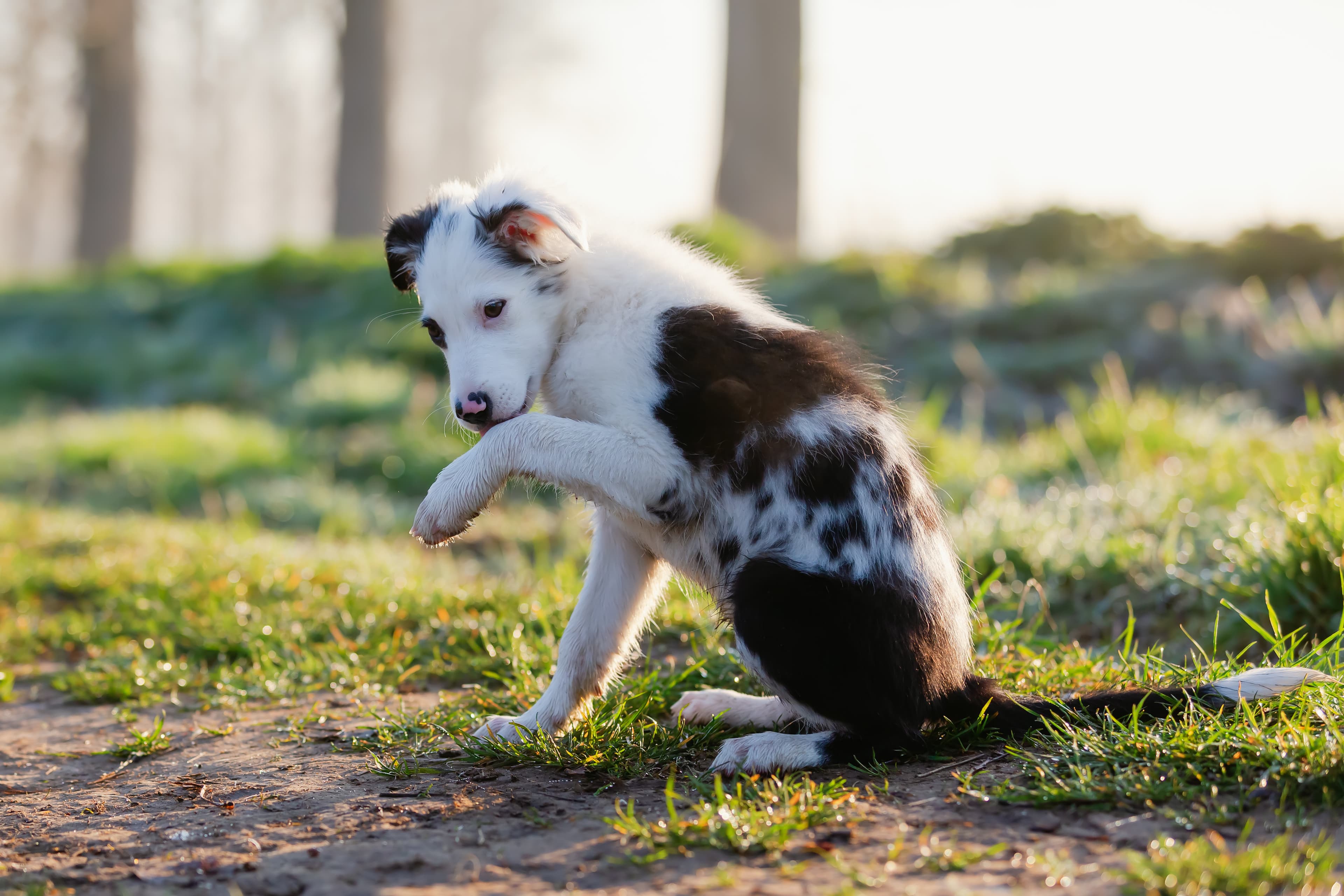
If your dog has a wound on its paw, it might lick the injured area. If you notice this, you'll need to put a recovery cone on them to prevent inflammation or infection.
Claw injuries
If you notice a claw injury, try to get a good look at the claw and the nail bed. If the entire claw is missing and only the quick is visible, wash the paw daily with soap and water and use a recovery cone. It's a good idea to protect the paw with a boot when outside to keep it clean, but let the claw air out indoors. If your dog is in pain, a vet will need to examine them, as pain relief and possible treatment may be necessary.
If your dog won't let you examine or clean the paw, or if you see chipped claws or a crooked claw, you need to see a vet. The injury usually isn't an emergency requiring out-of-hours care. Just make sure your dog can't lick the paw and visit the vet the next day.
Handling paws
To make things easier if you need to examine your dog's paws more closely, it's a good idea to get them used to paw handling from an early age. Gently get your dog accustomed to you touching their legs and paws. Be patient, go slowly, and always offer positive reinforcement and praise during these practice sessions.