A dog first aid kit
Just like with people, there are everyday situations where your dog might get hurt unexpectedly, even if you’re a really careful owner. To help you out if an accident happens, we’ve put together a list of things you can get and keep at home so you’re as prepared as possible.
First, make sure you have the phone number for your nearest 24-hour vet clinic saved in your mobile. That way, you can easily reach them in a serious emergency.
It’s also a good idea to have a small first-aid kit at home with useful items for minor injuries that you can treat yourself. Here’s a list of things you should keep handy:
Compresses
Sterile compresses are essential for wound care. They help reduce infection risk by cleaning away fluid and debris from wounds.
Cotton wool (preferably on a roll)
Cotton wool is used for wound care and applying bandages. It's shock and pressure absorbent under elastic bandages and helps manage wound fluid.
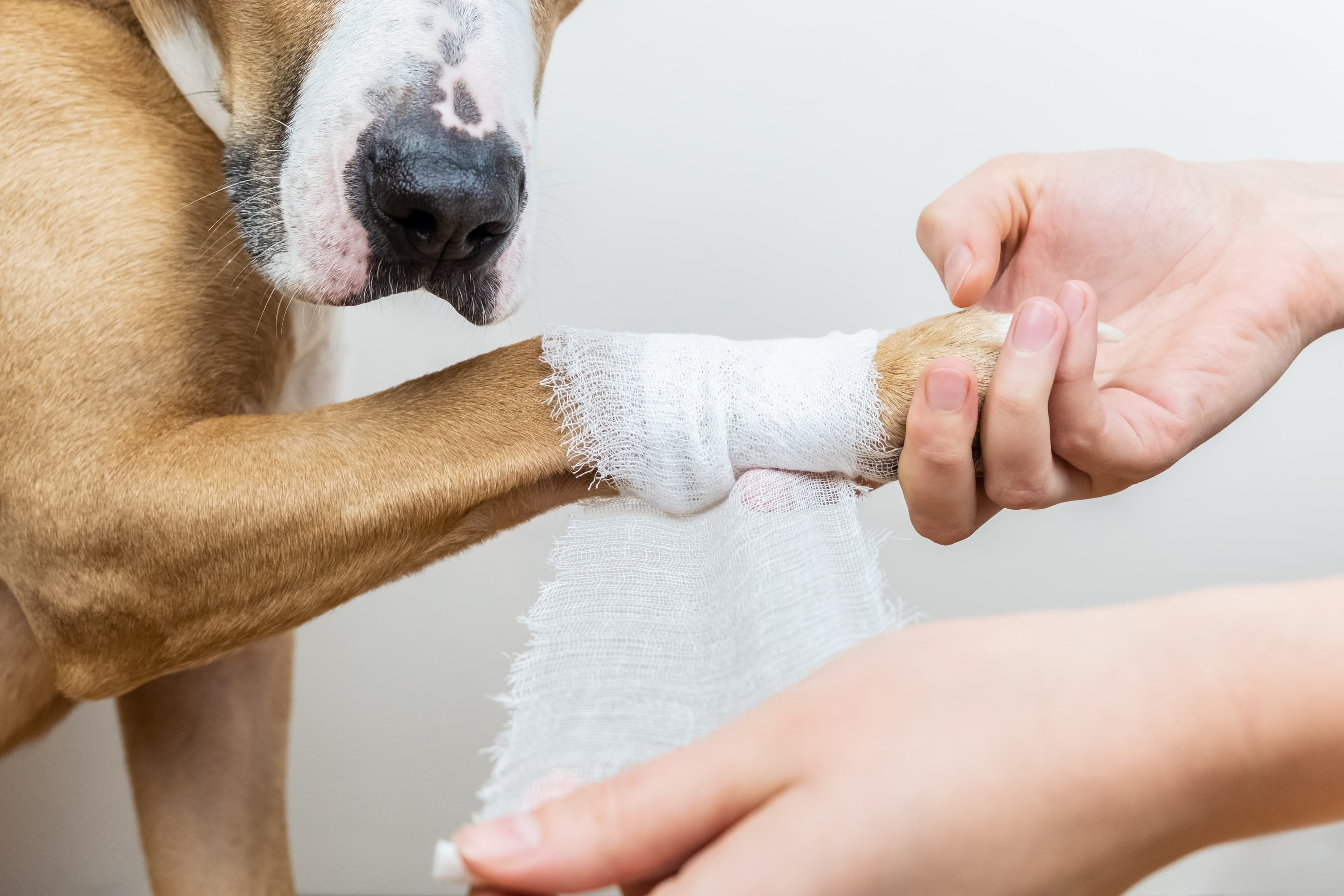
Self-adhesive bandages
These are used to hold dressings securely in place.
Saline solution
Use saline solution to gently rinse dirt from wounds or skin issues, or to clean eyes or ears. It’s sting-free. You can buy ready-mixed saline solution from a pharmacy or make your own. Ready-mixed versions can be stored at home for a long time, but homemade solutions should be used within 24 hours.
Chlorhexidine solution
Chlorhexidine is used to clean and disinfect wounds, killing or inhibiting bacterial growth. Always read the patient information leaflet before use.
It’s important not to use just any disinfectant on your dog’s wounds, as some human products can be harmful to animals. Products containing Octenidine (like Octenisept wound disinfectant spray) or other antiseptics from the same brand should never be used on your dog’s wounds. They can cause tissue damage, potentially leading to necrosis (tissue death) in deeper wounds.
Rehydration solution for dogs
Just like people, dogs can suffer from dehydration. If you do a lot of exercise with your dog, especially on warmer days, they might need help restoring their fluid balance. You can also give them rehydration solution if they’ve been ill or had diarrhoea to help them recover. Rehydration supplements for dogs are available as powder sachets from your vet or pharmacy.
Protective collar (cone)
A protective collar helps stop your dog from biting, licking, or scratching wounds or injuries.
Thermometer
A dog’s normal temperature is around 38-39°C. Measure it gently in their anal opening.
Dog-friendly plasters
Your dog can get cuts and scrapes too, so it’s sensible to have some dog-friendly plasters at home.