Newborn Puppies
So much happens in a puppy's first few weeks. They start to see and hear, and learn to interact with their littermates and us humans. This developmental period is crucial for shaping the puppy they'll become as adults.
The first few weeks
When puppies are born, they're both blind and deaf. For the first ten days, key parts of their brain aren't active, and the newborn relies almost entirely on its environment to survive. Initially, a puppy's life is all about eating and sleeping. A healthy puppy is never completely still; even in deep sleep, you might notice slight twitches of the head or body. A newborn puppy's skin is very sensitive to pressure, especially around the muzzle and under their paws. This helps them find their mum's teat.
Puppy's body temperature
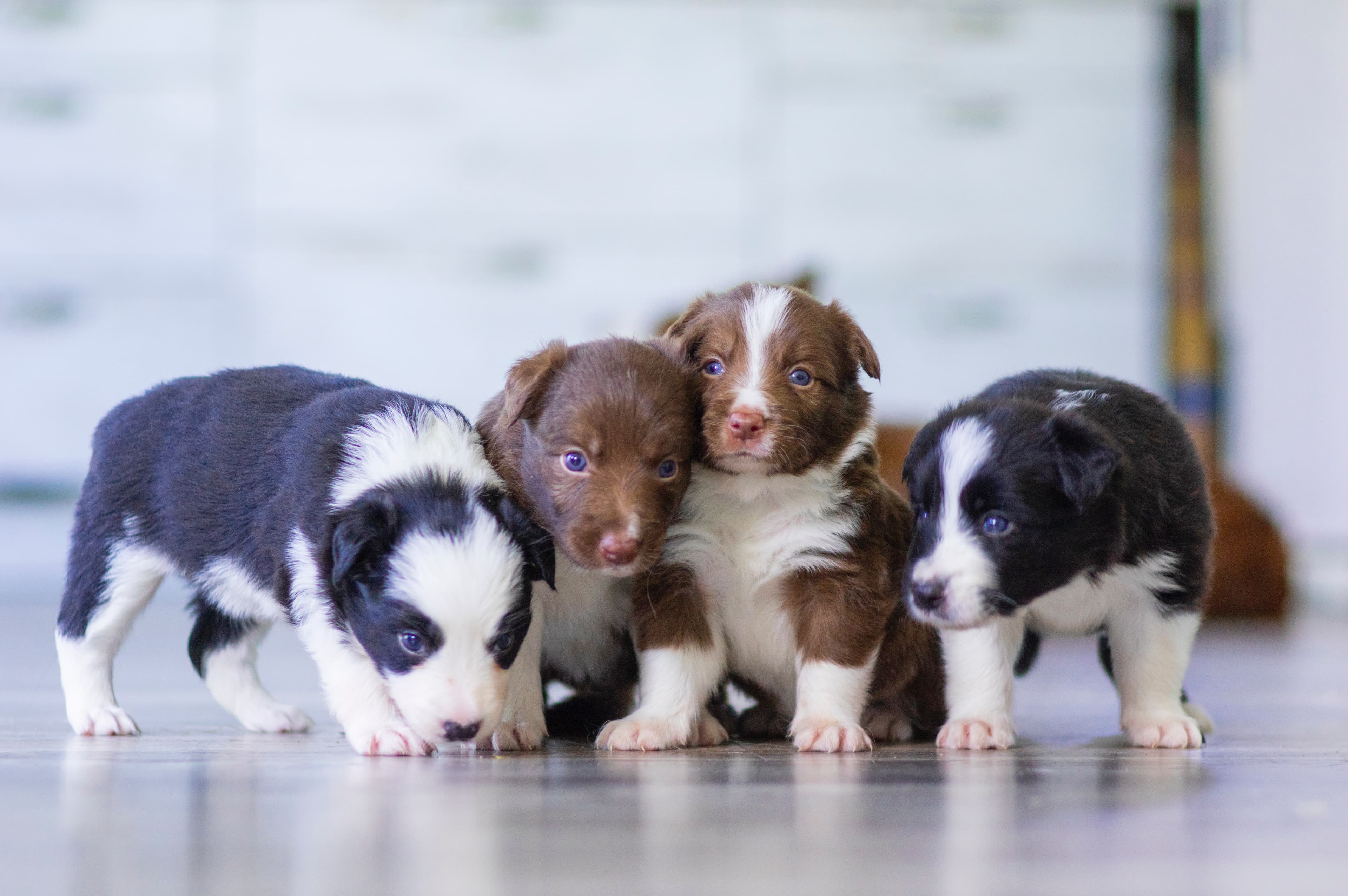
A newborn puppy can't regulate its body temperature effectively, so it's vital to ensure their environment is warm and the surface they lie on isn't too cold or wet. A room temperature of around 20-22°C is usually adequate, though slightly warmer might be needed for smaller, less-furred breeds. It shouldn't be so warm that the mother dog is uncomfortable. Signs the puppies are too cold include them piling closely together. If they're scattered around their bed, they might be too warm.
Developing sight and hearing
Between two and three weeks old, a lot changes for puppies. Their eyes gradually open around 8-10 days old. Initially, their vision is poor, but they start to perceive shadows. By three weeks, their eyesight should be relatively good. Until then, protect their eyes from bright light. Hearing develops gradually, with puppies starting to hear around 15-20 days old.
Social development
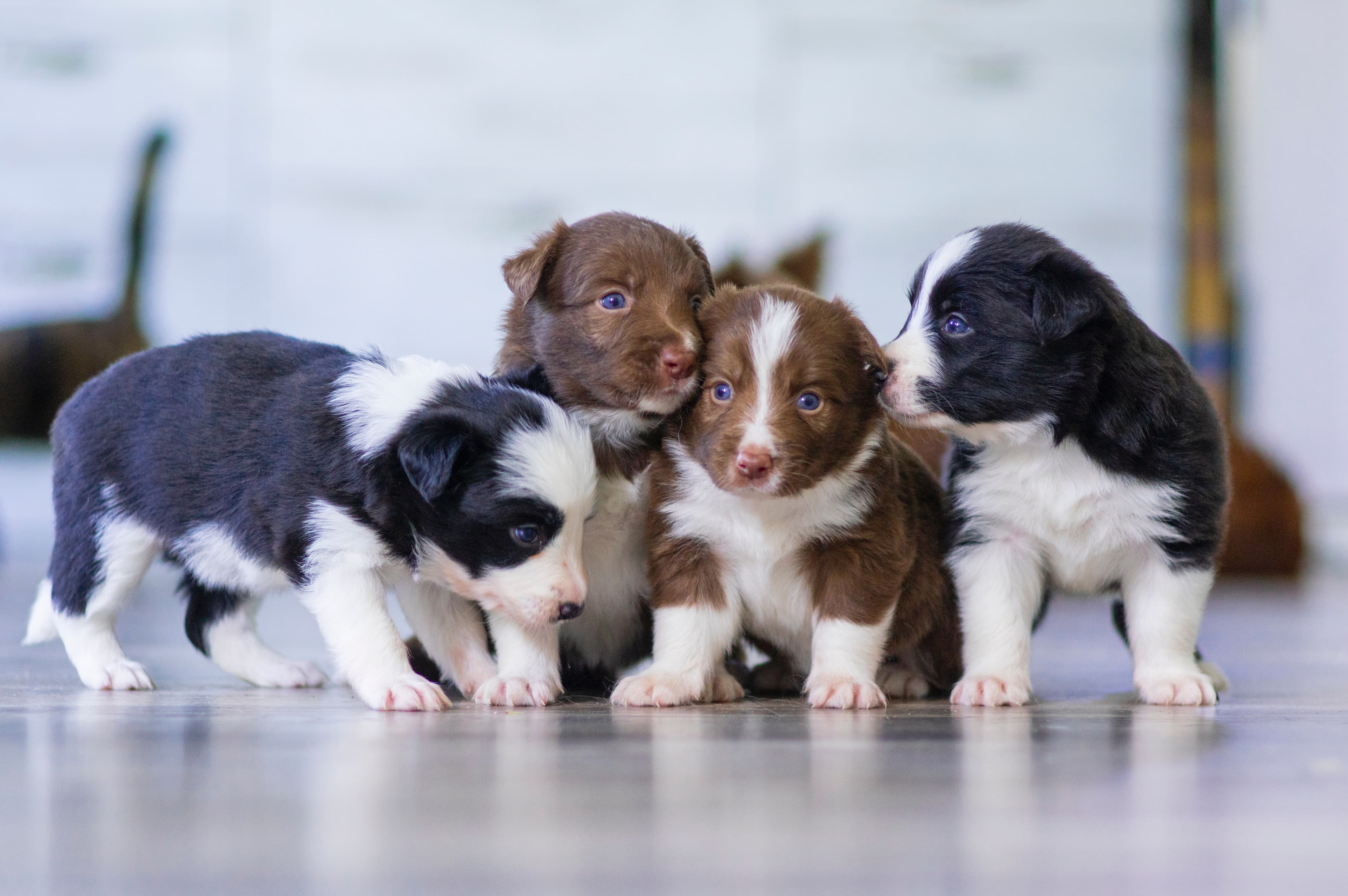
A puppy's socialisation period begins at around 3 weeks and lasts until they're about 12 weeks old. How this period unfolds significantly impacts their future development, and contact with their mother and littermates is essential. Through play and gentle 'fights' with their siblings, puppies learn how to 'dog' and understand boundaries. A lack of this can lead to problems in adulthood, such as aggression or fear towards other dogs.
If puppies have regular contact with people during this time, they'll learn to see us as part of the pack. Handle each puppy individually several times a day, getting them used to human touch in a calm and positive way. Around 5 weeks old, puppies tend to be least sceptical of their surroundings, making it a good time to introduce them to new, positive experiences. Generally, a puppy will be less fearful and wary of a new situation than an inexperienced adult dog. However, if a puppy is frightened during this period, they may retain that fear for a long time – potentially for life.