Maine Coon Cat Guide
About the Maine Coon cat breed
Weight: Males: 5-9 kg, females: 3-5 kg
Wither height: Height at the withers: Up to 40 cm
Energy level:Energy level: Calm
Lifespan:Lifespan: 9-15 years
Social need:Social needs: Medium/high
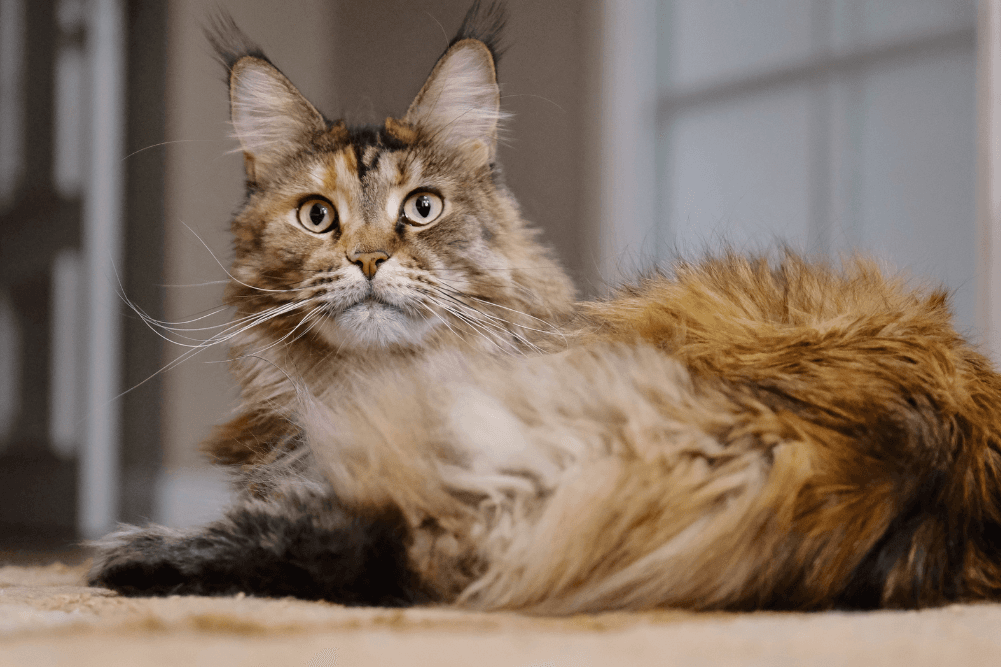
Colours:Colours: Available in a wide variety of colours, including white, black, blue, red, cream, brown, silver and tortoiseshell.
Health problems:Health problems: Generally healthy, but can be prone to the hereditary condition Hypertrophic Cardiomyopathy (HCM).
The Maine Coon's personality
The Maine Coon is a calm, friendly and social breed, known for its impressive size. They enjoy human company, are very sociable, and get along well with other pets and children. Their laid-back nature makes them suitable as both indoor and outdoor cats. However, Maine Coons also love to play and need sufficient exercise and mental stimulation to thrive.
Maine Coon appearance and coat care
The Maine Coon is a large, broad, and muscular cat with large, pointed ears that often have tufts. Their coat is long and thick, yet silky and relatively easy to care for. This is partly because they have less undercoat and a medium-length topcoat. As a result, matting is less common, and a weekly brush is usually enough to keep their coat healthy and shiny.
Health concerns for Maine Coons
The Maine Coon breed isn't typically prone to many health issues. However, they can suffer from a hereditary condition called Hypertrophic Cardiomyopathy (HCM), which affects the heart muscle. There's a specific health programme for the breed to help prevent the genetic predisposition from being passed on.
Weight management
Obesity is a common issue for cats today, and Maine Coons can be particularly prone to putting on excess weight. Being overweight increases the risk of various common feline diseases. It's important to help your cat maintain a healthy weight – you can find out more in the Lassie app.
Dental health
Did you know your cat's teeth need brushing? Daily brushing is the best way to prevent gum disease (periodontitis). You can learn more about this in our app. Dental disease FORL is also common in cats, often occurring alongside periodontitis. Brushing your cat's teeth can be a challenge, but with patience and tasty treats, they'll eventually get used to it. Our app includes a course on how to brush your cat's teeth.
Poisoning
Many everyday items can be toxic to cats, which might not be obvious. For example, certain plants are poisonous – you can find out which ones in the Lassie app. Other common toxins include chocolate and rodent poison. Always store dangerous items safely out of your cat's reach.