Oriental Shorthair: Everything you need to know about this cat breed
Quick facts about the Oriental Shorthair cat
Weight: males 3–5 kg, females 2–3.5 kgWithers height: 20–25 cm
Energy level: energetic
Lifespan: 8–15 yearsSocial needs: medium
Colours: comes in a range of patterns and many colours, including white, chocolate, blue, brown, cream, red, and fawn.Health problems: Generally healthy, but can be prone to eye problems and kidney conditions like Polycystic Kidney Disease (PKD).
Personality of the Oriental Shorthair
The Oriental Shorthair, often called the Oriental, is a lively, sociable, and intelligent cat breed that tends to be very talkative. It's incredibly affectionate towards its humans and thrives on love and attention. Playtime and mental stimulation are key for this active breed with a high energy level. It loves to jump, climb, and perch in high places, so cat trees are ideal! Its intelligence also means the Oriental Shorthair can be relatively easy to train to walk on a lead.
Appearance and coat care of the Oriental Shorthair
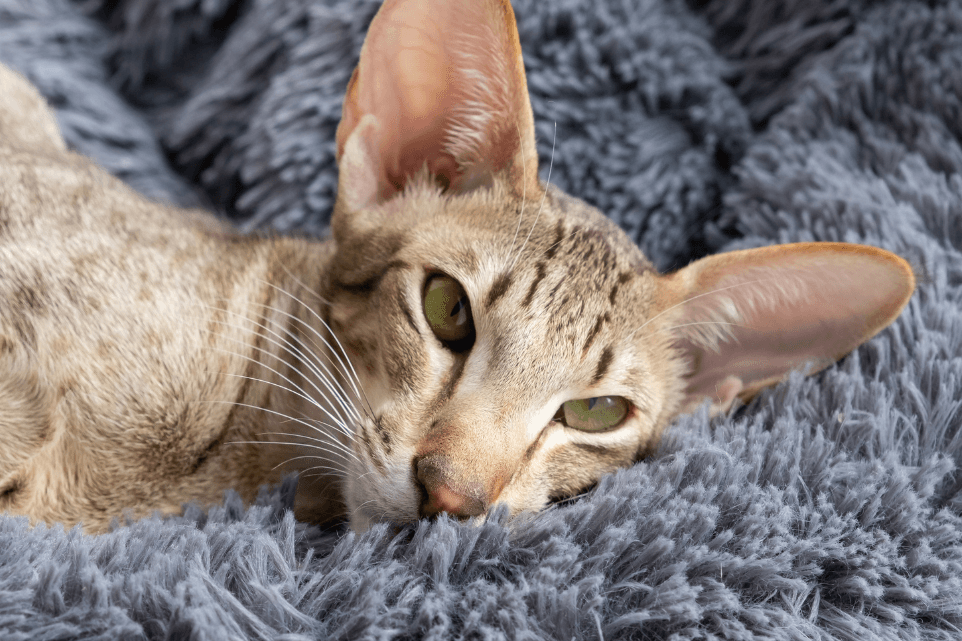
The Oriental Shorthair is medium-sized, long, and slender. Its large ears, elongated nose, and big eyes give it a distinctive look. The coat is short, dense, and glossy, lying close to the body. While it doesn't need extensive grooming, this breed often associates brushing with affection and usually enjoys it. Because Oriental Shorthairs shed very little, they can be a suitable breed for some allergy sufferers. Brush the coat about once a week to remove loose hair and keep it looking its best.
Health problems in the Oriental Shorthair
The Oriental Shorthair is generally a healthy cat breed. However, the shape and size of its eyes can make it more prone to eye problems, so ensure they're kept clean. Like all cats, Orientals can be susceptible to hereditary diseases, and some may develop kidney issues such as Polycystic Kidney Disease (PKD). A balanced diet can help support good kidney health.
Oral health
Did you know you should brush your cat’s teeth? Daily brushing is the best way to help prevent gum disease. The dental condition here. The dental disease FORL is common in cats and often occurs alongside gum disease. Brushing your cat’s teeth can be challenging, but with treats and plenty of patience, your cat will usually get used to it over time. Find out more about how to brush your cat’s teeth here. You can learn more about dental care for cats here.
Poisoning
Many everyday items can be poisonous to cats, some of which might surprise you. Houseplants are one example – find out which plants are toxic to your cat here. Other examples of things that are poisonous to cats include chocolate and mouse and rat poison. It’s important to store anything dangerous to cats where they can’t reach it.